Creatine Side Effects and the Hair Loss Myth: What You Should Know
Creatine is one of the most researched and widely used supplements in the fitness industry. Yet despite decades of studies supporting its safety and effectiveness, concerns about creatine side effects — especially the fear of hair loss — still circulate online. While the hair loss debate continues online, the performance benefits of creatine are well established. Creatine supplementation has been shown to:
- Increase muscle strength and power
- Improve high-intensity performance
- Support muscle growth over time
- Enhance recovery between sets
- Improve cognitive performance in sleep-deprived individuals
It works by increasing phosphocreatine stores in the muscles, allowing for better ATP production — your body’s primary energy source for explosive movements. This exquisite compilation showcases a diverse array of photographs that capture the essence of different eras and cultures, reflecting the unique styles and perspectives of each artist. Fleckenstein’s evocative imagery, Strand’s groundbreaking modernist approach, and Kōno’s meticulous documentation of Japanese life come together in a harmonious blend that celebrates the art of photography. Each image in “The Stories Book” is accompanied by insightful commentary, providing historical context and revealing the stories behind the photographs. This collection is not only a visual feast but also a tribute to the power of photography to preserve and narrate the multifaceted experiences of humanity.
Common Creatine Side Effects
For most healthy individuals, creatine is considered very safe when taken at recommended doses (3–5 grams per day). However, like any supplement, there can be mild side effects in certain cases.
The most commonly reported creatine side effects include:
- Temporary water retention (especially in the first week)
- Mild stomach discomfort if taken in large doses
- Bloating (usually dose-related)
- Dehydration if fluid intake is too low
It’s important to note that creatine does not damage the kidneys in healthy individuals, despite old myths suggesting otherwise. Numerous long-term studies have shown no harmful kidney effects when used responsibly.
Most side effects occur when people “load” creatine aggressively (20 grams per day for 5–7 days). Skipping the loading phase and sticking to 3–5 grams daily minimizes most issues.


Does Creatine Cause Hair Loss?
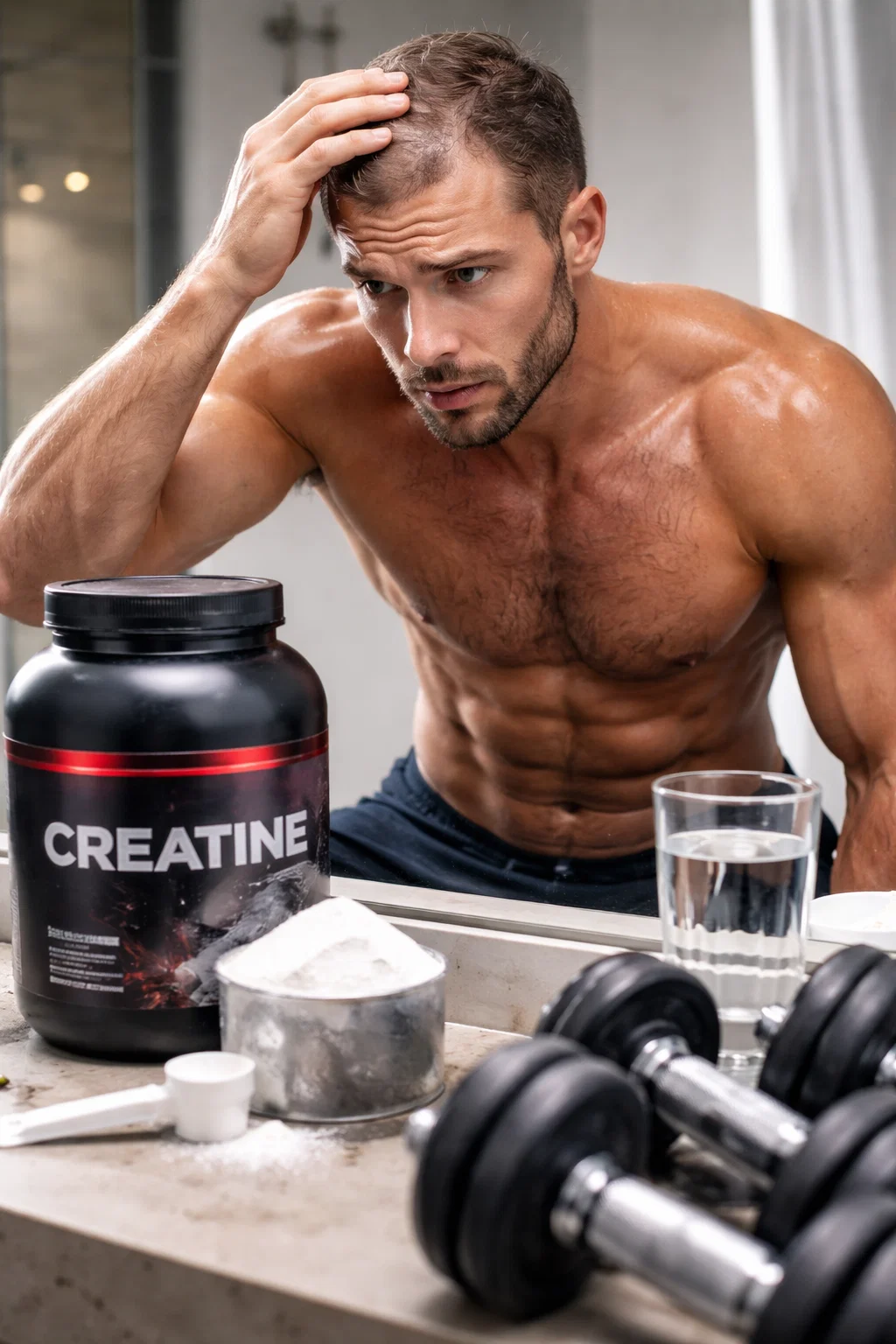
The hair loss concern comes from a single small study conducted in 2009 involving rugby players. The study found that creatine supplementation increased levels of DHT (dihydrotestosterone), a hormone linked to male pattern baldness.
- The study did not measure actual hair loss.
- It involved only 20 participants.
- No follow-up studies have confirmed the finding.
- DHT increased but remained within normal clinical ranges.
If someone is already genetically predisposed to male pattern baldness, theoretically higher DHT levels could play a role — but this has not been proven in controlled research. For most users, the hair loss claim remains a myth rather than a proven side effect.
The Hair Loss Debate vs. Proven Results
While the hair loss debate continues online, the performance benefits of creatine are well established. Creatine supplementation has been shown to deliver real, science-backed results that athletes and fitness enthusiasts rely on every day.
5 Clinically Supported Benefits
- Increase muscle strength and power
- Improve high-intensity performance
- Support muscle growth over time
- Enhance recovery between sets
- Improve cognitive performance in sleep-deprived individuals
How Creatine Actually Works
It works by increasing phosphocreatine stores in the muscles, allowing for better ATP production — your body’s primary energy source for explosive movements. This simple mechanism is why creatine remains one of the most researched and effective supplements for anyone training hard.
conclusion
When evaluating creatine side effects, it’s important to separate evidence from internet rumors. Mild water retention or stomach discomfort can happen, but serious risks are rare in healthy individuals.
As for hair loss, current research does not support the claim that creatine causes balding. If you are genetically prone to hair loss and concerned about DHT levels, you may want to monitor your response — but for the vast majority of users, creatine remains one of the safest and most effective performance supplements available.